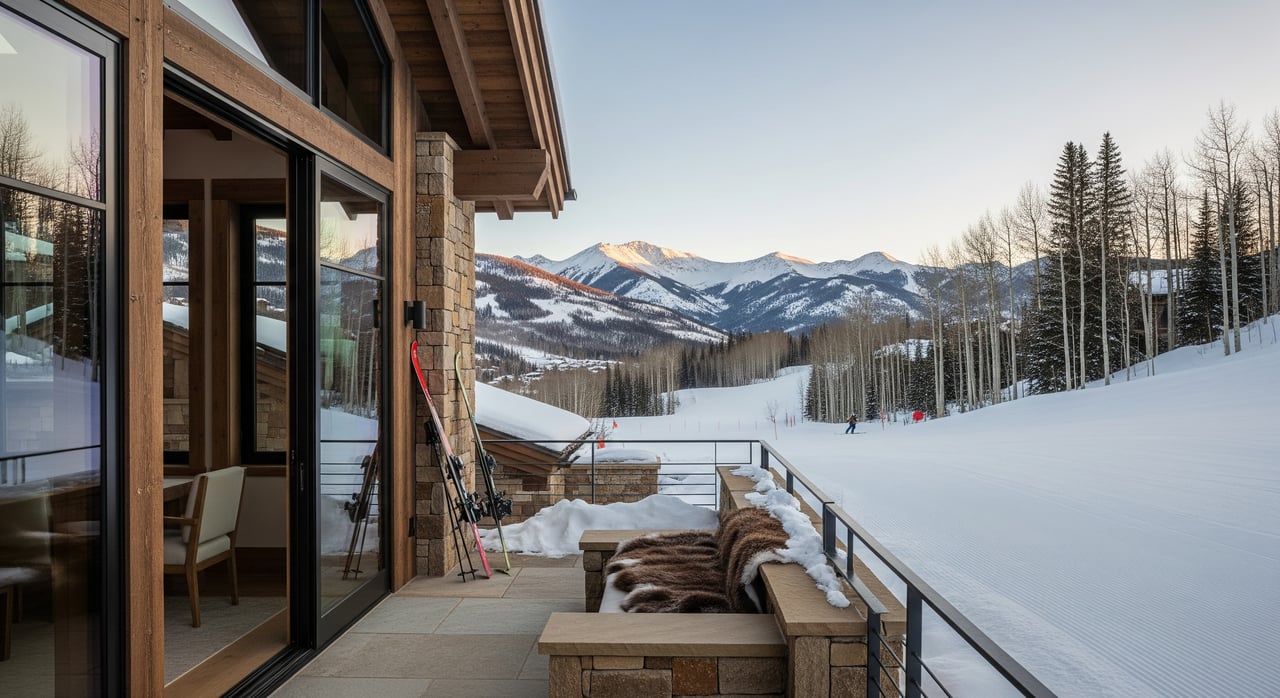
Is ski-in/ski-out in Deer Valley really skis-on at your door, or just a short walk to a lift? If you are browsing listings from out of town, the wording can be confusing. You want straight answers so you can protect your time, your budget, and your lifestyle goals. This guide breaks down what ski-in/ski-out means in Deer Valley, how access is created and maintained, and the steps to verify a property’s claim before you buy. Let’s dive in.
Ski-in/ski-out in Deer Valley
In Deer Valley, ski-in/ski-out generally means you can put skis on at or very near the property and reach groomed terrain, and/or ski back to the door or building area without a long walk or a drive. The best scenarios feel seamless and predictable. The difference comes down to how the connection is built, who maintains it, and what happens in thin-snow periods. Clear expectations will help you compare options with confidence.
Access types to compare
- Direct ski-in/ski-out: Doorstep or building steps open onto a groomed run or a designated connector. Little to no carrying of skis.
- Ski-out or ski-down only: You can ski from the property to a lift or base but may need a walk, shuttle, or uphill traverse to return.
- Ski-in only: You can ski back to the property from higher terrain, but getting out requires a lift, shuttle, or a walk.
- Walk-to-lift: A short walk, often 1–10 minutes, to a chairlift or gondola. Fast access, but not literal door-to-slope.
- Shuttle or valet access: Regular resort, municipal, or HOA shuttle to a lift area. Convenient for many buyers, but it is not the same as direct slope access.
If a listing uses broad language, ask for specifics like “doorstep to run,” “designated groomed route,” and the typical time or distance to the nearest lift terminal.
How access is created and recorded
Many Deer Valley properties rely on legal structures that make skiing to and from the building possible. The most common are recorded easements and resort or HOA agreements that allow grooming, snowmaking, or skier passage across private land. These rights are typically recorded in county title records.
Some developments were master-planned beside lift terminals or groomed runs under agreements with the resort. Others use private connectors that an HOA maintains. Shuttle or valet programs can fill gaps where direct skiing is not practical. Each setup has different obligations and costs, so it is important to see the documents behind the marketing.
How to verify a listing’s claim
Start with maps and official sources. Overlay the property’s parcel on the Deer Valley trail map to locate the nearest groomed run, connector, and lift. You can review current lift and grooming status on the resort’s mountain report and find trail maps to understand terrain flow.
Next, confirm legal rights and responsibilities. Ask for the preliminary title commitment and look for recorded ski access easements or reciprocal rights. Then request the HOA’s CC&Rs, plats, budgets, and service contracts that spell out grooming or shuttle obligations. When you need public records, start at Summit County’s official site to find the Recorder and GIS resources.
Finally, confirm operations. Contact Deer Valley mountain operations to verify whether a specific connector is maintained and whether snowmaking supports it in low-snow periods. For city services and shuttles, check Park City’s free transit system, which connects base areas and neighborhoods, on the Park City Transit page.
Operational factors that matter
Grooming and snowmaking
Grooming schedules and snow depth drive reliability. Routes with regular grooming and snowmaking tend to be more predictable, especially early and late season. Ask whether the specific connector to your building is groomed and whether it benefits from snowmaking support.
Lifts and seasonal schedules
Access depends on which lift you rely on and when it runs. Base-area lifts often offer simpler returns, while some higher lifts or connectors can be seasonal or conditions-dependent. Confirm the nearest lift terminals and typical operating dates and hours using Deer Valley’s mountain report.
Safety and avalanche control
Resort-managed areas are mitigated as part of normal operations. Private connectors may sit outside those zones. For broader safety context and regional conditions, consult the Utah Avalanche Center and ask whether your access route is subject to any closures during control work or storms.
HOA and city services
HOA responsibilities can include plowing, grooming of private connectors, ski storage areas, shuttles, and valet services. Review budgets and reserve studies to see how these are funded. Park City offers free public transit that connects major base areas and neighborhoods; schedules and routes are available on the Transit page.
Weather and climate variability
Lower-elevation routes can be more sensitive to warm spells and late-season conditions. Snowmaking and grooming help, but it is wise to confirm the elevation of your connector and how it performs in thin-snow periods. For industry context on resort operations, you can also review resources from the National Ski Areas Association.
Daily living details
Day-to-day ease matters as much as the map. Look at ski storage, boot rooms, and gear-drying setups. Confirm owner and guest parking, and whether there is a staffed concierge or valet to simplify arrivals, rentals, and housekeeping.
Value, costs, and rentals
True ski-in/ski-out in Deer Valley is a premium amenity. These properties often draw stronger demand and can sell faster than homes farther from the slopes. The quality of the building, the reliability of the connection, and the overall location all influence pricing.
Expect higher carrying costs where the HOA funds snow removal, grooming of connectors, shuttles, additional staffing, and extra insurance. Review the HOA budget and reserve study, and scan recent meeting minutes for special assessments.
If you plan to rent, verify rules and licensing up front. Short-term rental demand in Park City and Deer Valley is strong, but municipal rules, taxes, resort policies, and HOA restrictions drive what is allowed. Confirm minimum-night rules, booking platform policies, and any in-house rental program requirements before you underwrite income.
Buyer due diligence checklist
- Map the property against the Deer Valley trail map to pinpoint the nearest groomed run, connector, and lift.
- Request the preliminary title commitment and recorded easements that create your ski access.
- Obtain HOA CC&Rs, plats, budgets, reserve study, and any grooming or shuttle contracts; verify who must maintain the connector.
- Confirm lift operations, grooming, and any snowmaking that supports your route using the resort’s mountain report.
- Ask Deer Valley mountain operations whether your connector is within their control or an HOA-maintained path.
- Visit in a shoulder period or request recent photos, video, and a GPS track from the front door to the nearest lift.
- Check Park City transit options for non-driving access to base areas on the Transit page.
- Confirm parking allocations, gear storage, and onsite services like ski valet, lockers, and concierge.
- Review municipal and county rules for rental licensing and taxes starting from Summit County’s site.
Work with trusted local advisors
The best ski homes deliver a lifestyle that feels effortless. The difference between a great fit and a compromise often shows up in the fine print and the slopeside details you confirm ahead of time. If you want a property that truly skis from the door and performs in every season, partner with a team that does the legwork for you.
When you are ready, the Hudgens | Harrison Real Estate Team can help you vet access, review documents, coordinate with Deer Valley operations, and curate tours of the right properties. Schedule a concierge consultation and let us handle the steps that protect your purchase.
FAQs
How do I confirm true ski-in/ski-out in Deer Valley?
- Ask for the recorded ski access easement, review the HOA plat and CC&Rs, overlay the parcel on the Deer Valley trail map, and confirm who maintains the connector and grooming.
Do all Deer Valley ski-in/ski-out homes reach a lift from the door?
- Not always; some are slope-adjacent for door-to-run skiing but still require a short walk, traverse, or shuttle to the nearest lift terminal.
Will low-snow periods affect my access?
- They can; properties supported by snowmaking and regular grooming offer more predictable access, especially early and late season.
Are HOA fees higher for ski-in/ski-out buildings?
- Often yes; HOAs that fund connector grooming, shuttles, valet, and added staffing or insurance usually carry higher dues.
Who handles avalanche safety near access routes?
- Resort-managed areas are mitigated as part of operations; private connectors may sit outside those zones, so confirm responsibilities and check the Utah Avalanche Center for regional conditions.